Monday, January 03, 2011

Original Father of Dravidian Speakers - IV

I think it is "ata".

My daughter and my niece both started with 'ata'. One of my relatives also confirmed the same about their infant son. 'Ata' has survived only among Tamil Muslims among Dravidian speakers.  But Dravidian Muslims generally have Turkish identity thus it's possible that they adopted Turkic word for father. Nevertheless, since it's natural for babies in Dravidian region - my niece in Mumbai-Maharashtra, my daughter in Hyderabad-Andhra Pradesh and my relative in Kasaragod-Kerala/Tulu region - to call 'ata' than any other term starting from 'a', I suppose it could be a native term for Tamil Muslims too.

Friday, December 31, 2010

The Moral Individual - ii

In my previous post I had argued that man is innately moral. I considered 'empathy' generates moral behaviour among human beings and empathy is an innate trait as it's found amongst other animals too. However, after observing my infant daughter I have to make a fundamental change in my argument.

I propose 'morality' is not an innate trait but a function of two processes in a human being.
- Experience of pain which generates self-pity
- A feedback loop inside the brain which associates the cause of pain with self-pity

I believe babies get their clue for rewarding behaviour (associated with the neurotransmitter dopamine) in a mild form of violent behaviour called playing. I suppose violence is the first basic instinct that  humans get as a surviving technique. Babies basically employ pulling, mangling, biting and hitting. They grunt and clasp their jaws as if their motivating factors. No amount of pleading, painful face making would deter them. Sometimes it only increases their pleasure.

However, when babies are hurt, they want our utmost care. They want our sympathy. In other words, pain generates self-pity among them that they want others to empathize. This is not just about crying at the moment when they are hurt. When the moment is over and pain has subsided they still want us to be attentive to the open wound. Pain is important for the surival in case of injuries, however, on the other hand, it develops a sense of helplessness and thus 'self-pity'.

In my opinion, every person who has felt pain has developed 'self-pity'. Stoicism is a  learned behaviour in the adulthood. However, this self-pity to become empathy one needs to have a proper feedback loop in the brain that can associate the cause of the pain with the self-pity. The genetic defects can affect such feedback loop. I'm already suffering from one such impairment related to reinforcement learning.

So a moral individual cannot be moral in every aspect. There could be hardly any instances that an individual experiences all the pains in the world. We need to further expand the definition of a moral individual with this in mind. Since this is not an innate behaviour, a person can grow in morality throughout his life. And the pain need not be just physical. It can be psychological or financial.

A normal moral individual of a set of morals: This person has experienced a set of pains and his feedback loop is alright that he has turned his self-pity into empathy. However, in aspects which didn't cause him any pain he's incapable of empathizing.

A true moral individual of majority of morals: This person has experienced a set of pains and his feedback loop is alright so that he has turned his self-pity into empathy. However, he also has a higher intellectual capabilities or common sense such that he can identify the fundamental nature of the cause of the pain and this would enable him to empathize with other pains caused by seemingly different causes.

But it's possible to make the first type (normal) individual to behave like true moral individual by inculcating empathy thro' education and developing taboos.

People with impaired feedback loop lack empathy.

Sunday, December 26, 2010

The Tulu Tribes - VI

In some of my previous posts I was discussing about the origin of matriliny. Some of the points I made during the argument based on the findings of other anthropologists;
- Whereas patrilarchy is about exclusive male rights; matriliny is about equal rights (except in the case of politics where it was a male privilege)
- Only tribes in food abundant regions could develop equal rights society because division of labour wasn't there and both men and women participated in hunting
- All civilizations were created in regions where male was the primary warrior. Thus original civilizations were naturally patriarchal
- It's possible for matrilineal civilizations to come up if the tribes in food abundant regions come into contact with sedentary civilizations people who aren't part of ruling classes
- Tulu tribes (tribes part of present day Kerala and Tulu regions) became matrilineal as they were part of food abundant regions and met mostly merchants-artisans from the sedentary civilzation of the north

I think I need to make a drastic change in this theory.

I am proposing Kerala and Tulu regions became matrilineal because there was a huge male migrant population to these coastal regions which resulted in imbalance in male-female ratio and thus polyandry was the only option left. Thus the children became part of mother's family as that was the only sensible thing for civilized migrants.

Of course, this theory has precedence in another theory with a opposite scenario. According to one theory about matriliny in Kerala, it had been argued that during hundred years of Chera-Chola war, Nayars lost a lot of men and there were excess of Nayar women. Thus a new type of familial relationship was created (called Sambandham) where men and women had relationship only for sex. Anyway, this has been discredited since hundred year Chola-Chera war itself has been considered a mere legend. I would say there are too many other reasons to reject it.

Even if Chola-Chera war was indeed the case then Central and South Kerala regions should have shown very strong matrilineal traditions but only Malabar (north Kerala) one could find matriliny across majority of the castes and tribes. Also, Matrilineal traditions were common in Tulu region too without the caste and tribe divisions(with exceptions everywhere). In Tulu region many castes share the same lineages.

Now coming to my new theory, let's discuss what would have happenend if Kerala and Tulu regions received a greater number of male migrants than there were tribes  pre-existing in that region. We should note that these two regions had active trading relationship with Greeks, Romans and Semites. There was every reason for merchants and their workers to stay back build a life there. But how would they find females for procreation. Probably, if the number of migrants isn't very large as compared to the native population, speculating the longest male wait and earliest female readiness every person could have found a bride. But if the scenario is beyond such adjustments then I would suppose only polyandry could have helped them.

I believe once the polyandry gave rise to equilibrium in sex-ratio after few generations depending upon the rate of migration, the most people would have gone back to monogamous life (or polygynous). But I suppose if it takes many generations to reach the equilibrium then the aspects of polyandry become ritualized. This plausibly the reason behind matrlineal civilzation of Tulu and Malayali regions. It should be noted that even polyandry has become ritualized for certain castes and tribes even after an equilibrium had been reached in the sex ratio.

Friday, December 24, 2010

Origins of Indians: Version 8.4

Coastal Migration Theory and I:
A new paper on another archaic hominin species and their admixture in Homo Sapiens is out[2]. According to the study, hominin species labeled as 'Denisovans', remains of whom found in Siberia, were related to Neanderthals. Let me call our old friend Neanderthals as N. Euskaria and these Denisovans as N. Siberia.

A previous study found N. Euskaria admixture in all of Eurasian Sapiens but not in African Sapiens[3]. This was considered as a proof of early Sapiens meeting with N. Euskaria in middle east and their subsequent dispersal to all over the world.

Now the new study has found N. Siberia admixture in Melanesians but which supposedly missing in other Euraisans and Africans. These two studies have a bearing on my model of the northern route migration of Homo Sapiens.

Until now I have based my opposition to the coastal migration theory on two counts.
- Lack of common sense in the model considering India is a tropical country like Sapiens' original home in Africa and there was no pressing need for further migrations to SE Asia and Oceania. I have proposed that the movement thro' temperate landscape would develop the wanderlust that our ancestors have been famous for in occupying the whole of Eurasia in a quick time. They migrated in search of a tropical climate until they reached SE Asia.

- The second factor is genetic. The lack of uniparental lineage Y-Haplogroup D, associated with the coastal migration, in India and the uniform distribution of Y-Haplogroup C (which is now strangely considered as "intrusive" Ancient North Indian or not part of the original gene pool -which has been called Ancient South Indian- in a recent study[4]) cannot be overlooked. Along with the fact that India's so-called oldest mtDNA lineage M2 is mostly observed in East India. This of course gives evidence for migration from SE Asia to India (and then further into Middle East and Europe).

Probably, I need to give add one more factor or probably replace the common sense approach to more circumspect scenario.

Now we know that N. Euskaria and N. Siberia interbred with us. We also know that we don't have N. Euskaria an N. Siberia Y-Haplogroup or mtDNA lineages.  There could be two scenarios.
1. Male Sapiens and Female Neanderthal species mated and produced only fertile males and sterile females. Therefore, only Sapiens' uniparental lineage survived.
2. Female Sapiens and Male Neanderthal species mated and produced only fertile females and sterile males. Therefore, only Sapiens' uniparental lineage survived.

We really don't know whether both scenarios were in vogue or only one of them had occurred. But since both N. Euskaria and N. Siberia were Neanderthal species we could see that above two scenarios have been found consistently true.

I would propose the reason for Sapiens' rapid migration along northern route from middle east to Siberia and from there to SE Asia along western east Asia is related to the second scenario.

It has been observed that Neanderthal communities always had lower percentage of females or lacked enough females so all males could have sex and/or procreate, a situation similar to Haryanvis. It was a common practice for a Neanderthal group to abduct females[5]. In contrast the oldest Sapiens had excess females[1]. So what would happen when a Hominin with enough females meet another Hominin that has scarcity.

Evidently there was a very strong evolutionary pressure on Neanderthals to abduct Sapien females than vice versa. This had resulted in Sapiens' rapid migration from middle east to central Asia to escape from N.Euskaria. But unfortunately for them there they would meet N.Siberia who had similar evolutionary pressure since they were also a branch of Neanderthals.

So, we do see Siberia admixture among one of the Y-Haplogroup C population in Oceania, Melanesians. Since the admixture is clearly because of a species related to Neanderthals and not any Erectus branch in SE Asia,  we can say that northern route was taken by the early Sapiens.

References:
1. Estimators of the Human Effective Sex Ratio Detect Sex Biases on Different Timescales
  - Emery et al. (2010)
2.Genetic history of an archaic hominin group from Denisova Cave in Siberia
  - Reich et al (2010)
3. A Draft Sequence of the Neandertal Genome
  - Richard E Green et al. (2010)
4. Reconstructing Indian population history
  - Reich et al (2009)
5. The documentary I saw either on Discovery or National Geographic channel

Wednesday, December 08, 2010

Terror Attacks - I

The central government claims that they have given specific intelligence about terror strikes. The state government claims that they haven't received any 'actionable' intelligence. This drama was played during Mumbai attacks and had been repeated for the latest Varanasi bomb blasts. I suppose IB reports should be brought under RTI with certain conditions. Now this specific intelligence has become dud the public must be able to examine that.

Wednesday, December 01, 2010

Random Thoughts - V

What if there is an Indo-Pak war? India and Pakistan will suffer but the world will be a better place for everyone else.

Tuesday, November 30, 2010

Random Thoughts - IV

First it was Madeleine Albright and now it is Hillary Clinton. I suppose Bill Clinton has surrounded himself with overawed feudal women.

Friday, November 26, 2010

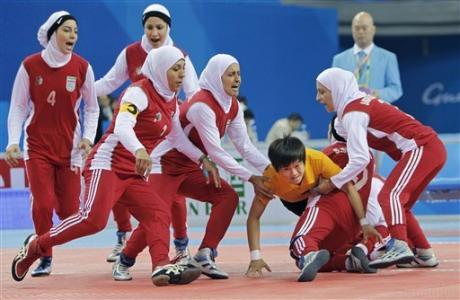
Cheating?

Doesn't covering hands and legs completely give undue advantage in Kabaddi? I guess grip on bare legs is firmer than on clothed legs.

Image courtesy: Faramarz.

Thursday, November 18, 2010

Agriculture in South India - notes

Zimbabwe land reform 'not a failure'

the 10-year study of 400 households in the southern province of Masvingo debunks five myths:
That land reform has been a total failure
That most of the land has gone to political "cronies"
That there is no investment on the resettled land
That agriculture is in complete ruins, creating chronic food insecurity
That the rural economy has collapsed.
I hope such a study would be conducted in India too. The problem is the impact of many of India's ground breaking policies has not been studied scientifically. The first one should be highly politicized 'caste reservations'.

Sunday, November 14, 2010

Liberation from caste identity - Part II

2. Alternative Worldviews:
In the alternate world of united India, would it be possible for the intellectual classes of underprivileged castes to liberate their fellow caste men? As we have already seen proselytizing religions might have attracted many a family from these castes. However, whether the castes as a whole might have converted is difficult to imagine. Some of the castes have created their own religious structure on account of certain strong religious figures, but, they too have adopted the Vedic scriptures. It's tough to determine whether they have overcome the caste identities. I'll take up a scenario where intellectual classes coming up with alternate worldviews. But is it possible?

An alternate worldview requires a reference ideals. These are not hard to find after the success of,
- human rights
- scientific methodology
- fiscal accountability (maybe)
in western European society. However, the problem is all of these are textbook ideals for the castes. These are neither part of traditions nor written in holy books. And thus, do not invoke respect or reverence.

Then what is the alternate worldview that these intellectual classes can propagate?

Few years back I read an article in a Kannada periodical belonging to a Malayali weavers' caste that somewhat looks in that direction. First let us check what the author had to say when this community faced its greatest crisis or moment of truth around 50 years ago. I have translated the article from Kannada.

When we rewind our memories to 50 years back, the visual that opens up and haunts our minds was that of perennial struggle with poverty, ignorance, illiteracy and inferiority complex. It was a time when our dependence on our caste occupation led us to pauperism. Majority were below poverty line. No education; No job; No roof on top; No clothes to wear; The caste occupation was our slow poison. When the question of life and death looming large, how many of us left our loved ones and migrated to unknown lands in search of jobs? How many of us ended up wearing masks to escape from inferiority complex, suspicion, disrespect, poverty and illiteracy? When the caste and the caste occupation couldn't lift us up form this predicament, how many of us became chameleons to assimilate into a new place, a new language, new people and a new environment?
Here we observe that except for poverty all other handicaps like inferiority complex, suspicion, disrespect and ignorance were legacy of the caste system. However, the author doesn't see those as the necessary requirements to escape from the caste identity. In fact, he calls upon younger generation, whom he views as successful on account of being educated and successful in their new fields, to take pride in their caste identity and continue the cultural traditions ( of course not the ones that required them behave like slaves in front of Brahmins) associated with the caste system or Hinduism.

This is a typical case of pooling individual successes of the present (despite the caste) to give respect to their past caste identity. It's again accepting a philosophy that during their moment of truth acted as a catalyst for their failures or legitimized their failures as an expression of the lower birth. More importantly, it is like accepting an ideology which transfers what should have been society's failure as whole to individual's failure thus further limiting generations of such individuals' families. This type of misguided pride in the caste identity and ideology can get perverted and can take as a vengeful caste pride in the case of castes with numbers in their side. Nevertheless, the author here is trying to give an identity to the younger generation who he believes, and probably correctly, as confused. So what is his worldview or ideals for the younger generation?

Nobody is superior and nobody is inferior in a society. As discerning critics and great souls have said, we are all essentially animals. Brahminhood is nothing but our intellectualism, discretion and good characters. We find barbarians who claim to be brahmins but behave even worse than petty animals amongst us or in our neighbourhood. Therefore, we should be brahmins by deeds. It is possible to achieve brahminhood whatever be the caste or whatever be the society around us.

The problem is that the salient features of brahminhood is an unqualified statement.

Brahminhood:
Let us forget all that self realization dumbness - even though that probably was one of his ideals- as it is fundamentally a flawed philosophy (misunderstanding of sexual reproduction...as I have argued in one of the posts before).

Let us overlook the castiest purity rules that were part of the good characters which required them piously discriminate other castes in the past.

Let us overlook patriarchal good characters which were completely misogynistic including that grotesque ideal of viewing females as gods. In fact, in many of these characters Malayali non-brahmin castes were very progressive with their serial monogamy for both males and females including widow re-marriage and divorce. Ironically, in present day middle class Kerala society it might be not very easy for Malayali widows to re-marry or divorcees to find men.

Let us overlook vegetarianism though many in the underprivileged castes think Brahmin success in education is because of their vegetarianism. For some strange reason the counter arguments considering the successful non-vegetarian Brahmin communities or non-vegetarian European society or argument that Brahmin communities had three to four generations of headstart in modern education along with their literate outlook do not help. I believe of all the things since it's the easier and cheaper one to follow that might have made the choice of vegetarianism attractive for many artisan and merchant castes.

I believe the author is hinting at simple life, integrity and discipline.

In my opinion, the first one is related to non-productive life that Brahmins lived. When the 'dharma' of a Brahmin was not material gain then simple life follows easily from that. However, it's completely irrelevant for productive people like weavers. In fact, majority of them lived simple life by default owing to their poverty in the past.
Integrity is indeed a noble ideal however if you consider non-materialist dharma of Brahmins it was in fact irrelevant in their case (make note integrity in other parts of life is obsolete as I have mentioned how Brahmin worldview might be considered very barbaric in those cases). It should be noted here that money making does not have noble obligations in the caste scriptures. In fact there was no dharma associated with money making thus there was no sin in wrongful money making. If anything was there it was for Brahmins and not for Vaisyas and Sudras. It's a fact of life in India that money making is considered legally corrupt and hence acceptable for everyone. The gods of India themselves require monetary inducements or monetary gratefulness. It may look contradictory to Brahmin ideals however considering the fact that only Agni is Brahmin among gods and the rest all part of either other Varnas or not part of the caste system, it makes sense. Thus integrity was not part of the gods too (as Agni isn't worshipped in India). If an Indian subscribes to the caste ideals and maintains his/her integrity then most likely it is out of indifference to life and not because it is the right thing for a human being.

Then there is discipline. Well, it was a must trait for any occupation. There is nothing Brahmin about it. But I'm not sure whether transferring the concept part of their occupation to education is intuitive for non-brahmins as it's for brahmins.

I think I can skip 'intellectualism' and 'discretion'.

So, what we understand here is, it would have been tough for intellectual class to come up with an alternative living in its Indian identity. It's a different matter if they are able to absorb the universal characters, that I have talked in the beginning and which became successful in Western Europe, as part of their communities' traditional culture and identify themselves with them.

How about the period when Islam didn't have much impact? The intellectual classes existed in pre-Islamic South India among these underprivileged castes. But they lost out mainly because they couldn't come up with alternate identities. Around 13-14th century when South India had stable kingdoms and trade flourished, such elite classes came into existence among many castes. Many artisans, fishermen, trader castes claimed Brahminhood or Kshatriyahood or Vaisyahood and wrote their own scriptures or came up with their own mythologies (notable thing is dominant agricultural castes though Sudras technically but never faced handicaps because of it didn't claim any higher Varna credentials).What we see in this seemingly stupid, hilarious or hypocritical act, in whatever the way one sees it, it shows no caste in its right mind accepted that it's low or some other caste is high. I have seen certain types of interpretations that the people accepted caste hierarchies without any kind of protests that we see in the class wars of Europe. In my belief it was the self-sustaining nature of the caste system that kept it for so long. There were rebellions in the past but they were put down by the castes just above them thus never really challenging the brahmin authority.

However, ironically, it was not the idea that there was nothing low or high by birth that remained in descendants of those communities today but their claimed higher castehood. It is very clear, that most of them became part of backward castes and needed to be helped by affirmative actions, that their forefathers idea of 'upgrading' didn't really work.

Unfortunately that intellectualism eludes a big chunk of them still today. And since 19th century literates among dominant castes see their second rank in the society unacceptable or Sudra title equally humiliating have come up with their higher Varna claims like 13-14th century artisans and merchants.

Reference:
1. Homo Hierarchicus by Louis Dumont